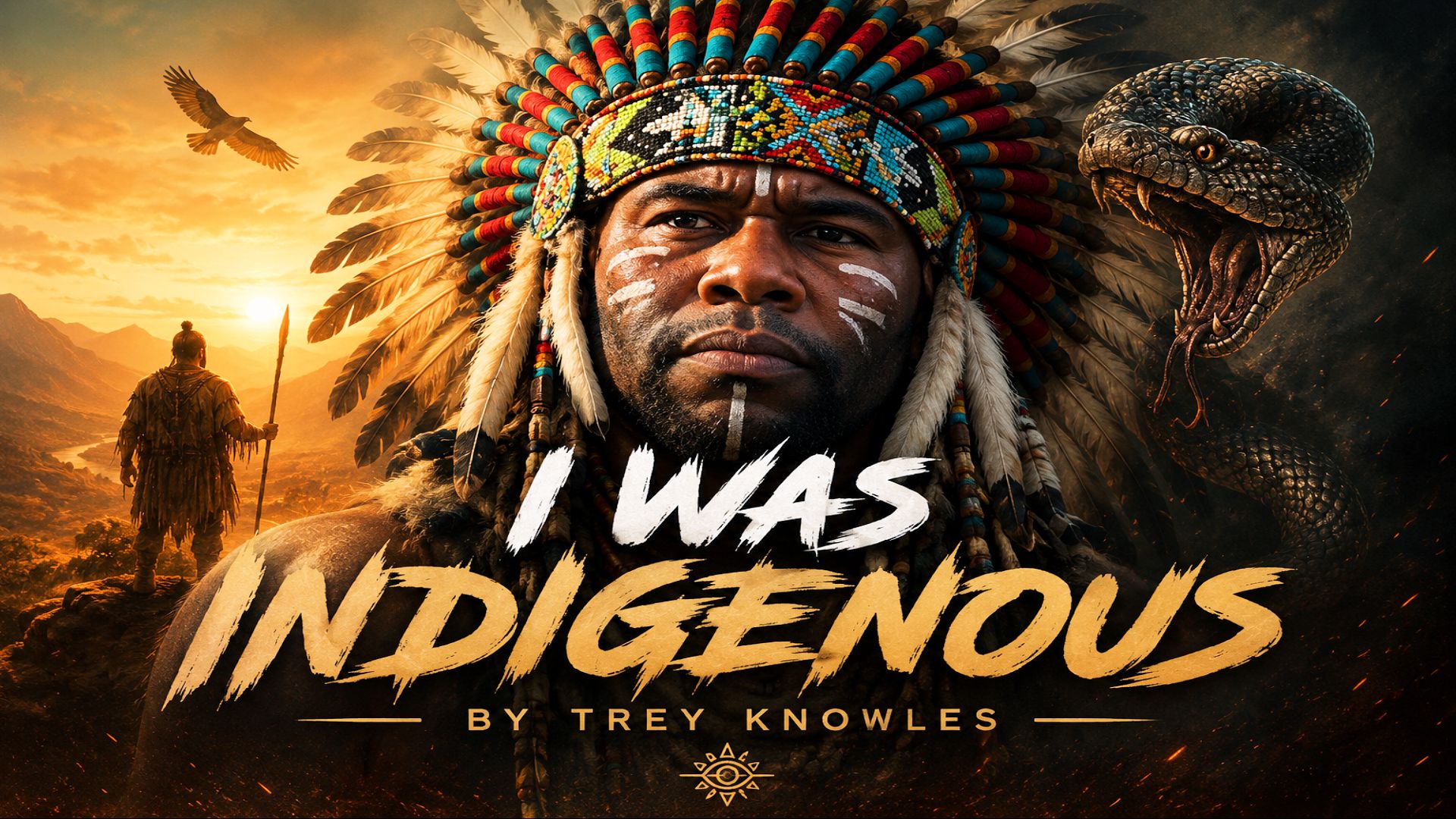
About “I Was Indigenous”
Trey Knowles’ I Was Indigenous explores the belief that humanity’s original identity was established by God long before nations, empires, cultures, and human traditions reshaped the world.
Humanity was created in God’s image—pure, righteous, and living in perfect fellowship with the Creator. In this original “indigenous” state, people possessed a direct relationship with God, walked in His truth, and lived according to His purpose without the corruption of sin or deception.
The work presents the Garden of Eden as humanity’s first homeland. Adam and Eve were not defined by race, nationality, politics, or earthly kingdoms, but by their relationship with the One who created them. They were entrusted with dominion over the earth and called to live in harmony with God and His commandments.
The central conflict begins when the enemy enters the Garden. Disguised as a serpent, the colonizer enters God’s perfect creation not to build or bless, but to deceive, corrupt, and conquer. His mission is to steal, kill, and destroy. Rather than taking land by force, he first attacks the mind—planting doubt about God’s Word and persuading humanity to abandon its original identity.
The serpent’s deception becomes an act of spiritual colonization, drawing humanity away from God’s truth and knocking people out of their indigenous state. From that moment forward, the human struggle becomes a struggle to recover what was lost.
Every generation faces the same choice: remain faithful to God or conform to the systems, desires, and deceptions of the world. I Was Indigenous teaches that people remain spiritually indigenous by rejecting the values of a fallen world, obeying God’s commandments, renewing their minds through His Word, and embracing the identity He originally intended for them.
The song is both a reflection and a challenge. It asks listeners to consider who humanity was before deception entered the Garden and what it means to return to God’s original design. Sin, deception, and spiritual colonization separated humanity from its Creator, but repentance, faithfulness, and a return to God’s truth open the way toward restoration.
Trey Knowles was indigenous—but what happened?