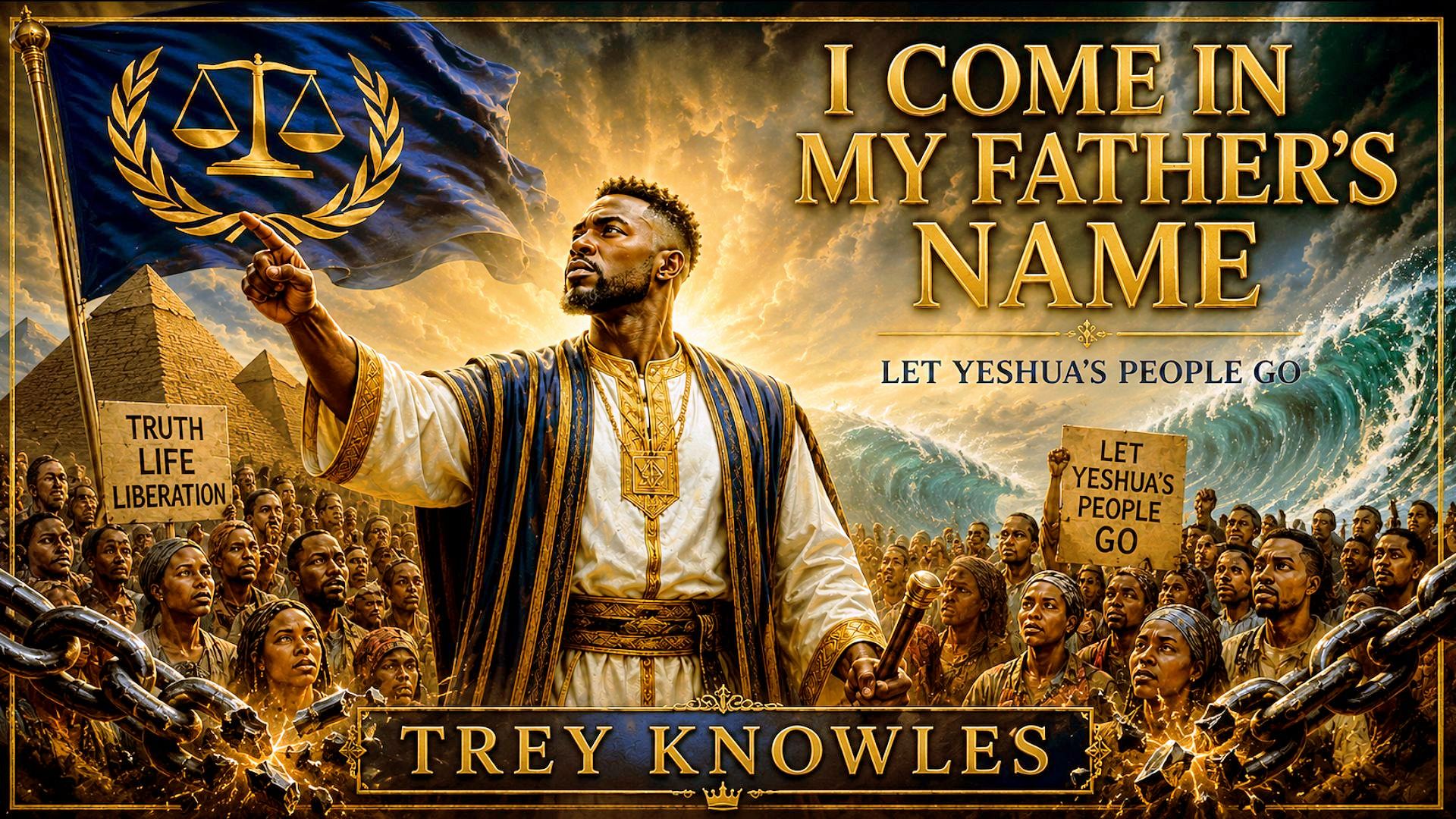
About “I Come in My Father’s Name”
“I Come in My Father’s Name” by Trey Knowles is a bold, prophetic song that challenges listeners to discern the difference between those who truly represent the Father in heaven and those who falsely claim His authority while displaying a different spirit. Inspired by the words of Yeshua, the song calls believers to examine the fruit of every messenger rather than accepting every religious claim at face value.
Blending biblical imagery with echoes of the spiritual anthem “Go Down Moses,” the song presents a modern call for deliverance from spiritual deception and bondage. Just as Moses confronted Pharaoh with the command, “Let My people go,” Trey Knowles proclaims, “Let Yeshua’s people go,” declaring that God’s people were not created to remain enslaved by false doctrine, corrupt leadership, fear, or systems that oppose the Father’s will.
At its heart, I Come in My Father’s Name contrasts two kingdoms. One reflects the Father’s character through life, truth, righteousness, freedom, mercy, and obedience. The other represents counterfeit authority, where people speak in God’s name while producing oppression, division, pride, hypocrisy, and spiritual death. The song reminds listeners that a claim to represent God has no value when a person’s actions, character, and teaching contradict the Spirit of the Father.
Throughout the track, Trey Knowles speaks as a messenger pointing listeners back to the Father and to Yeshua’s example. Its repeated declarations emphasize humility, faithfulness, obedience, and service rather than personal glory, religious status, or worldly power. The message challenges every generation to test the spirits, recognize counterfeit shepherds, and follow those whose lives bear the fruit of God’s righteousness.
Filled with scriptural symbolism, passionate conviction, and a call to spiritual awakening, I Come in My Father’s Name is both a warning and an invitation. It warns against deception by those who claim divine authority without displaying the Father’s Spirit, while inviting listeners to embrace truth, walk in righteousness, and experience freedom through Yeshua. More than a song, it is a call to repentance, discernment, and deliverance—a declaration that the Father still sends His servants to proclaim liberty to the spiritually captive and call His people back to Him.