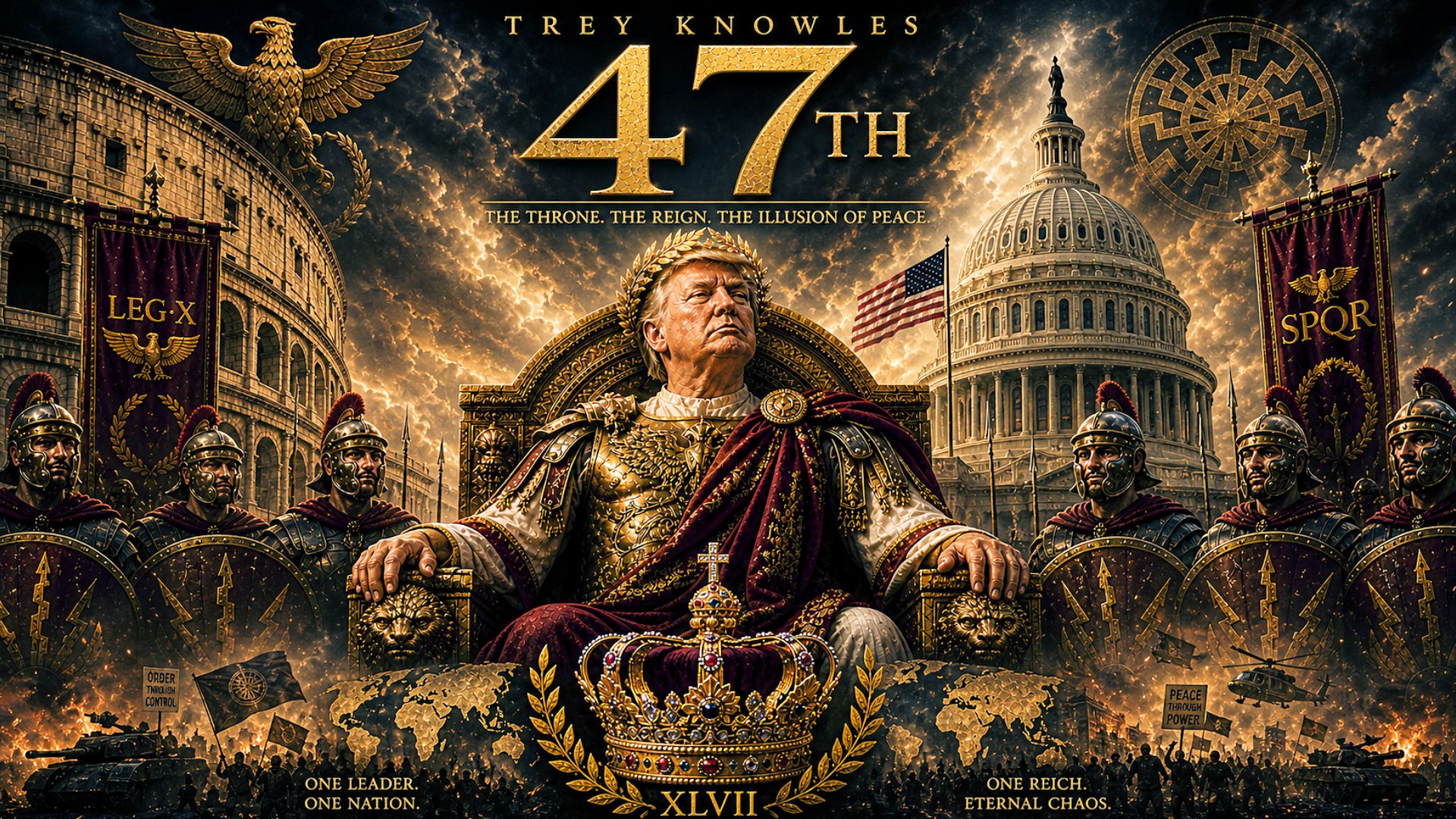
About the Song
Trey Knowles' allegory song "47th" is the son of the bloodline of the Holy Roman Emperor of Germany, who becomes the president of the United States. The Third Reich, which the Nazis referred to as the Thousand-Year Reich of earth control. 47th is the Tyrant who puts the world in chaos, pretends to bring peace, but causes humanity to kill one another.
Trey Knowles - 47th Song Breakdown
Trey Knowles' 47th presents a fictional U.S. president as a symbolic figure rather than a literal political prediction.
Through layered imagery and narrative tension, the song builds an allegory centered on power, deception, and human nature.
Authoritarian Rise:
The 47th character is depicted as a leader who ascends through charisma and lineage rather than merit.
References to ancient or imperial bloodlines reinforce the idea of inherited power, suggesting a system where authority is granted by legacy instead of earned through virtue or capability.
False Savior Narrative:
The president portrays himself as a restorer of order and stability. However, the lyrics imply that he manufactures chaos to justify his control.
This reflects a classic dystopian theme: a leader who positions himself as the only solution to a crisis he helped create.
Historical Echoes:
The song alludes to the Holy Roman Empire and the concept of the Thousand-Year Reich - not as direct comparisons, but as symbolic references.
These elements highlight how grand, mythologized histories can be used to legitimize domination and authority.
Humanitys Complicity:
A central theme is the willingness of people to believe in a savior figure, even when warning signs are evident.
The lyrics suggest that authoritarianism gains strength when individuals surrender critical thinking and accept comforting illusions over uncomfortable truths.
Spiritual Undertones:
Knowles blends political imagery with spiritual and prophetic language, creating a layered narrative.
In 47th, this fusion suggests that the leaders rise is part of a broader, almost cosmic struggle between truth and deception, elevating the story beyond politics into the realm of moral and spiritual conflict.
Overall, 47th functions as a cautionary allegory, exploring how power can be constructed, justified, and ultimately sustained through perception, belief, and collective participation.